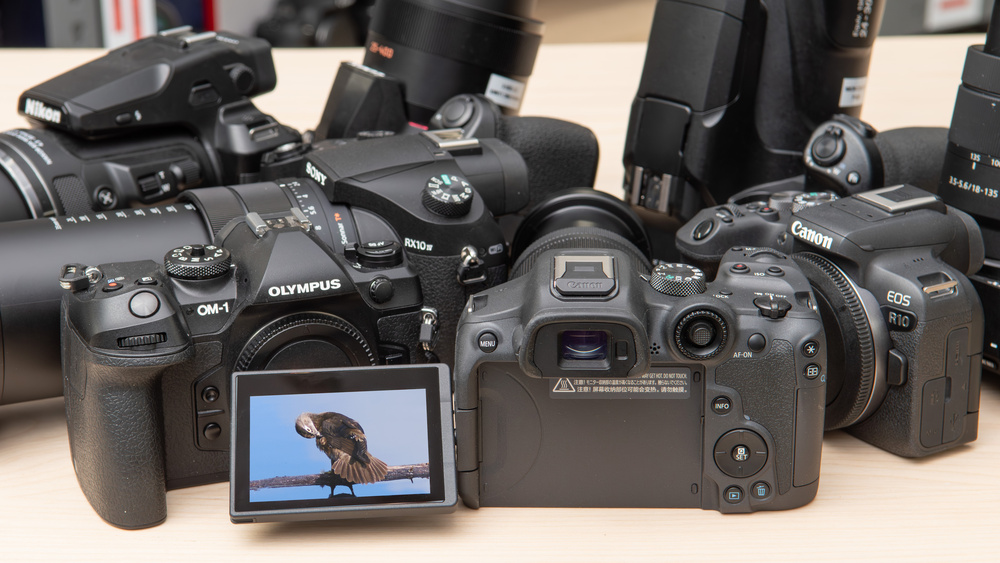
The Best Camera for Bird Photography is the Sony A9 III for professionals, or the Nikon Z8 for those who want pro-level performance without the flagship price. Both offer blazing autofocus speed, high burst rates, and the tracking systems needed to capture birds in fast, unpredictable flight.
Bird photography is one of the most technically demanding genres. Your subject is small, fast, and does not cooperate. The camera you use needs to lock focus in milliseconds and hold it through erratic movement. Here is what actually matters.
What Makes a Camera Good for Bird Photography?
- Autofocus speed and subject tracking: The camera must detect and lock on to birds automatically, even against busy backgrounds.
- Burst rate: Higher frames per second (fps) means more chances to capture the perfect moment. Aim for at least 15 fps.
- Buffer depth: How many shots the camera can store before it slows down during rapid-fire shooting.
- Reach: A smaller sensor (crop factor) gives you more effective zoom from the same lens.
- Weather sealing: Birds live outdoors. Your camera should handle dust and rain.
Top Cameras for Bird Photography
| Camera | Sensor | AF System | Burst Rate | Best For | Price (approx.) |
|---|---|---|---|---|---|
| Sony A9 III | Full Frame | AI Bird + Subject Tracking | 120 fps | Pros, action | $5,999 |
| Nikon Z8 | Full Frame | 3D Tracking + Bird AF | 20 fps (RAW) | All-round pro | $3,999 |
| Canon R7 | APS-C (1.6x) | Deep Learning AF | 30 fps | Best value | $1,499 |
| Sony A6700 | APS-C (1.5x) | AI Subject Recognition | 11 fps | Beginners/travel | $1,399 |
| OM System OM-1 II | Micro 4/3 (2x) | AI Bird Detection | 50 fps | Wildlife, reach | $2,199 |
The Crop Factor Advantage
Many bird photographers deliberately choose cameras with smaller sensors. Here is why: a 500mm lens on a Micro Four Thirds camera (2x crop) gives you the equivalent reach of a 1000mm lens. That is enormous for wildlife photography.
The OM System OM-1 II, despite its smaller sensor, punches well above its weight because of this reach advantage. A Canon R7 with APS-C sensor similarly turns a 400mm lens into a 640mm equivalent.
Lens Recommendations
- Sony FE 200-600mm f/5.6-6.3 G OSS: Best telephoto zoom for Sony users. Versatile and sharp.
- Nikon Z 800mm f/6.3 PF VR S: Surprisingly lightweight for 800mm. Exceptional sharpness.
- Canon RF 100-500mm f/4.5-7.1 L IS USM: Great zoom range for Canon R7 users.
- Sigma 150-600mm Contemporary: Budget-friendly option for Nikon, Canon, and Sony.
Beginner vs Pro: Quick Breakdown
| Level | Recommended Camera | Recommended Lens | Total Budget |
|---|---|---|---|
| Beginner | Sony A6700 or Canon R7 | Sigma 150-600mm Contemporary | $2,500 – $3,000 |
| Enthusiast | Nikon Z8 or Canon R5 II | Brand 100-500mm zoom | $6,000 – $7,500 |
| Professional | Sony A9 III or Nikon Z9 | 400mm or 600mm prime | $10,000+ |
Quick Tips for Better Bird Shots
- Use continuous autofocus (AF-C) at all times, never single-shot AF.
- Set your shutter speed to at least 1/1600s to freeze wing motion.
- Shoot in RAW for maximum editing flexibility.
- Learn bird behavior. Knowing when a bird is about to take off is worth more than any camera upgrade.
- Golden hour lighting (sunrise and sunset) adds warmth and dimension to bird portraits.
No camera replaces time in the field. Start with what you have, learn your subjects, and upgrade when you hit the limits of your current gear.