
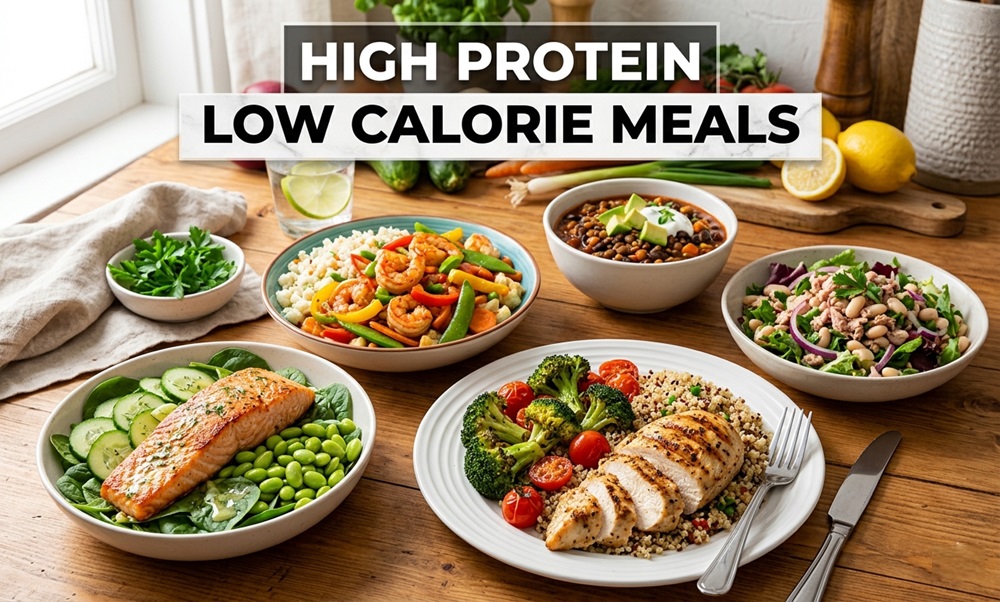
1. Grilled Chicken Breast + Steamed Broccoli + Brown Rice
~420 cal · 42g protein
The gold standard beginner meal. Cheap, simple, and endlessly customizable with different sauces and spices. Prep in batches of 4 servings on Sunday — it holds well in the fridge for 4 days.
2. Egg White Omelette with Spinach & Feta
~230 cal · 28g protein
Ready in 8 minutes. A high protein breakfast that keeps you full until lunch. Use 5–6 egg whites, a handful of spinach, and 20g crumbled feta. Season with black pepper and chili flakes.
3. Tuna Salad Lettuce Wraps
~180 cal · 30g protein
Canned tuna + Greek yogurt + mustard + celery served in romaine lettuce cups. Zero cooking required. One of the fastest high protein meals you can make — ready in under 3 minutes.
4. Cottage Cheese with Cucumber & Cherry Tomatoes
~160 cal · 22g protein
An underrated high protein meal that takes 2 minutes to assemble. Add a drizzle of olive oil, black pepper, and fresh herbs to elevate the flavor. Works as a lunch, snack, or light dinner.
5. Turkey & Veggie Stir-Fry with Cauliflower Rice
~350 cal · 38g protein
Swap regular rice for cauliflower rice to cut 150 calories while keeping the same plate volume and satisfaction. Use lean turkey mince, mixed peppers, onion, and low-sodium soy sauce.
Step-by-Step: How to Build Any High Protein Low Calorie Meal
Step 1 — Choose a lean protein base Chicken breast, turkey mince, canned tuna, egg whites, low-fat cottage cheese, or plain Greek yogurt. Target 100–150g per serving to hit 25–35g protein.
Step 2 — Add a low-calorie vegetable bulk Broccoli, spinach, zucchini, cucumber, or mixed greens add volume, fiber, and micronutrients for minimal calories. Fill half your plate with vegetables.
Step 3 — Add a small carb source (optional) Brown rice, sweet potato, or cauliflower rice. Keep portion to 60–80g cooked to stay under 500 calories total. Skip entirely if targeting under 350 calories.
Step 4 — Season, don’t sauce heavily Spices, lemon juice, mustard, and hot sauce add flavor for near-zero calories. Creamy sauces, oils, and dressings can add 100–200 calories silently — measure them carefully.
Step 5 — Batch prep 3–4 servings at once Store in containers for up to 4 days. This eliminates the “I don’t have time to cook” excuse that derails most diets. 45 minutes of Sunday prep = 4 days of effortless eating.
Common Mistakes Beginners Make
Mistake 1: Eating “healthy” foods in large portions Chicken breast is lean, but 400g is still 440 calories. Brown rice is nutritious, but 200g cooked adds 260 calories. Weigh your food for the first 2–3 weeks to build accurate portion awareness.
Mistake 2: Forgetting liquid calories A protein shake plus orange juice with breakfast can add 400+ calories before you’ve eaten a single meal. Stick to water, black coffee, or plain tea during meals.
Mistake 3: Skipping fat entirely A small amount of healthy fat (half an avocado, a teaspoon of olive oil) improves vitamin absorption and increases meal satisfaction. Eliminating fat entirely often leads to cravings and bingeing.
Mistake 4: Trusting “low fat” labels Low-fat products often replace fat with sugar to maintain flavor, which increases calorie density and spikes cravings. Always check the full nutrition label, not just the marketing claim on the front.
Quick Tips
- Use a food scale for the first 2 weeks — it trains your eye to portion accurately without needing to weigh forever.
- Cook proteins in bulk on Sunday. Pre-cooked chicken in the fridge eliminates decision fatigue on busy weeknights.
- Greek yogurt is a versatile protein hack — substitute it for mayo, sour cream, or cream in most recipes to cut fat and add protein simultaneously.
- Frozen vegetables are nutritionally equivalent to fresh and cost a fraction of the price. Stock your freezer with broccoli, spinach, and edamame.
- Add lemon juice or vinegar to meals — acidity brightens flavor and reduces the urge to add more salt or sauce.
FAQs
How much protein do I need per day for weight loss? Most research supports 1.6–2.2g of protein per kg of bodyweight for people in a calorie deficit. For a 70kg person, that’s 112–154g per day — spread across 3–4 meals for best absorption and satiety.
Can I build muscle on high protein low calorie meals? Yes, especially if you’re a beginner or returning to training after a break. A slight calorie deficit with adequate protein (1.8–2g/kg) supports muscle retention and often modest muscle gain in untrained individuals.
What’s the easiest high protein low calorie meal for beginners? Tuna lettuce wraps. Canned tuna + Greek yogurt + mustard + lettuce cups = 30g protein, 180 calories, zero cooking, and ready in 3 minutes. It’s the perfect starting point.
Are high protein low calorie meals expensive? Not at all. Canned tuna, eggs, chicken thighs, cottage cheese, and frozen vegetables are among the cheapest foods available per gram of protein. A full week of meals costs less than two restaurant lunches.
How many calories should a high protein meal have? Aim for 300–500 calories per main meal when targeting fat loss, with 25–40g protein per meal. This structure allows room for two snacks within a 1,500–1,800 calorie daily target.
How long does high protein low calorie meal prep last in the fridge? Most prepped meals (cooked chicken, rice, roasted vegetables) last 3–4 days refrigerated in airtight containers. Egg-based dishes are best consumed within 2 days. Avoid freezing meals with fresh greens — they turn watery when thawed.